
A Heart Twice Opened: Bing Bing's Legacy and Courage to Love Again

Twenty years ago, I met a dog whose eyes held the whole sky.
She came bounding toward me across a small apartment that smelled of someone else's life — a life she was about to leave behind. Her tail moved like a metronome set to joy, and in that one instant, before I even knew her name, I understood something with total certainty: nothing after this would be quite the same. That was the day I adopted Bing Bing from a teenage girl who was leaving for school and could not take her along.
I didn't know then that I wasn't just gaining a dog. I was signing up for twenty years of being taught, patiently and repeatedly, how to love something that could not speak.

The First Days: Learning to Listen
She did not eat. Not the first day, not the second, not the third. Her old owner had told me, almost offhand, "Just leave the dry food out — she'll come around." She didn't. I remember the particular helplessness of standing in a kitchen at midnight, a full bowl going stale on the floor, wondering what I had missed. I tried new brands, different textures, anything that might convince her that this strange new place was safe enough to eat in.
Then there was the matter of the grass. She would not — could not — bring herself to relieve herself on the pee pads I'd laid out so carefully at home. Only grass would do. It seemed like a small, almost comic detail at the time. In hindsight, it was the first lesson in a curriculum I'd be enrolled in for two decades: routine is a language, and if you want to be understood, you have to learn to speak it back.
So I built her a schedule. Same times, same door, same patch of grass down the block. And slowly — the way trust always arrives, not in a rush but in increments too small to notice until they've added up to something whole — she settled. She stopped flinching at sudden movements. She started meeting me at the door.
I think often about how little guidance I had in those early weeks. Back then, there was hardly any manual handed to you when you adopt a dog with a past, a dog who arrives already carrying a history you'll never fully know. You are simply handed a living creature and asked to figure it out in real time, mistake by mistake. It was terrifying. It was also, I see now, one of the most beautiful stretches of my life — because nothing teaches you patience quite like earning the trust of something that has already been let down once.
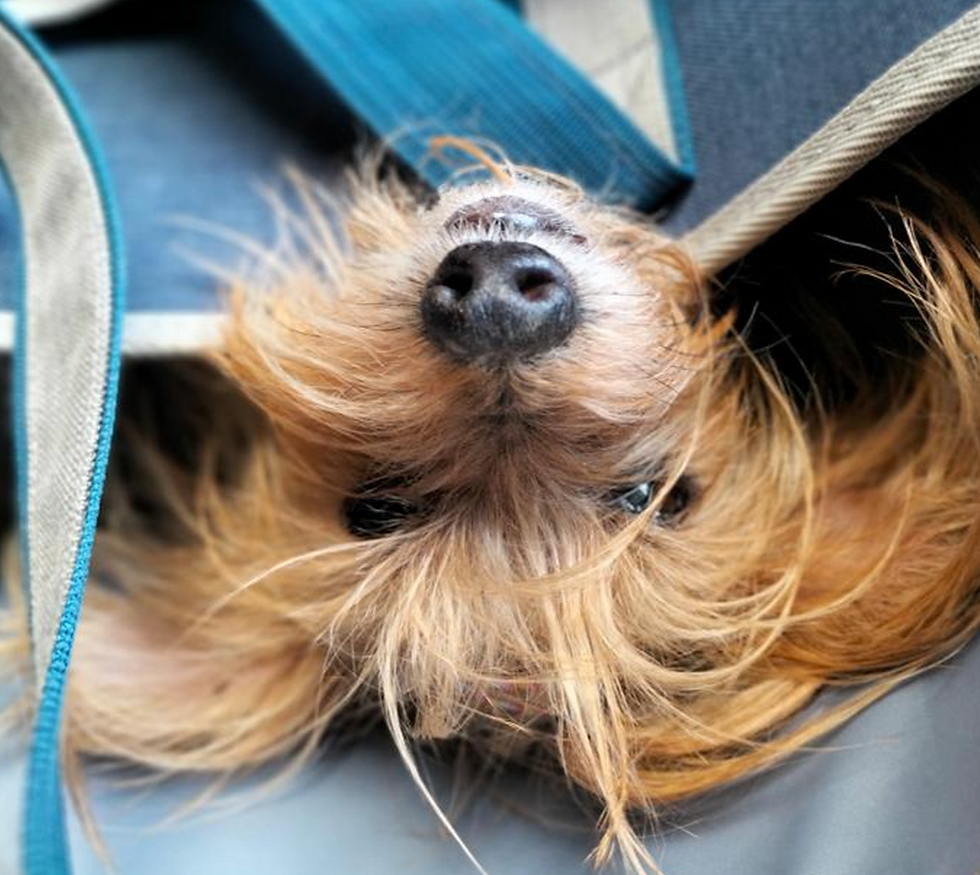
A Decade of Joy and Discovery
The years that followed did not so much pass as accumulate — one ordinary, glowing day stacked on top of the last, until a decade had somehow gone by.
I learned her the way you learn a language you love: slowly, and then all at once. Thunderstorms frightened her, so on stormy nights I'd hold her against my chest until the sky quieted down. Chicken made her sick, so I stood over a stove more evenings than I can count, cooking her pork instead, because her comfort had become, without my quite noticing, indistinguishable from my own.
She was not just a dog sharing my address. She was the one who knew before anyone else when I was having a hard day. She was my most consistent form of company, my confidante with no vocabulary and perfect understanding. Family, in the fullest sense of that word.

The Slow Unraveling
Age arrives in a dog the way it arrives in all of us — quietly, and then suddenly undeniable.
Her walks grew shorter. She took longer at the grass she'd once dashed toward. And then, one evening, a whine I hadn't heard before — sharp, involuntary, unmistakably pain. I drove her to the vet with my hands too tight on the wheel.
Bladder stones. She was seventeen. Surgery was ruled out; her body was too old to risk it. The vet, gently, gave her one to two months.
I have never forgotten the particular weight of that phrase. One to two months. It landed like a sentence being read aloud in a courtroom. But grief, I learned, can be reorganised into purpose. I changed her food to keep her hydrated. I shortened our walks but made them more frequent. I rearranged my work, my calendar, my whole rhythm of living, so that I could simply be near her.
The Miracle and the Goodbye
She gave us eight more months. Eight months that felt, and still feel, like a gift she insisted on giving us, past what her body should have allowed.
But near the end, she stopped eating even the foods she'd always loved. I tried everything — warming her meals, hand-feeding her one reluctant bite at a time, finally reducing to sugar water when nothing else would stay down. Twice a day I administered IV fluids myself, watching her small body flinch as the needle found her leg. She never cried out. She only made a soft, low sound, over and over, that I came to understand as her own private language for not yet. Not yet.
Near the very end, she would whine rather than soil the bed she lay in — some deep, unteachable dignity holding on even as everything else let go. I would rush to lift her, to help her stand, because that was the last thing I could still do for her.

In her final days, her body began to fail all at once. Just before what would be our last visit to the vet, she had a fit — fear, or pain, or both, I'll never know which. The vet looked at me and said, gently, that there was nothing left to try.
I held her as the needle went in. I heard the sound she made. I watched her take her final breath, and I understood, in that moment, why people say heartbreak is physical — because mine was. It is a moment carved permanently into whatever part of us holds our worst and most necessary memories. No one who loves an animal is spared this. And still, so many of us walk into it willingly, again and again, because the years before it were worth it.
The Emptiness and the Questioning
The house afterward did not feel merely quiet. It felt absent — as though a specific frequency of sound had been switched off and everything else was now too loud in its place.
I turned the last months over and over in my mind. Had we done right by her? Was there something more — some treatment, some decision — that might have bought her more time? These are the questions grief always asks, whether the one we've lost walked on two legs or four. They rarely have answers. I've come to believe they aren't meant to. They are simply how love insists on being paid.
Getting another dog felt, at first, unthinkable — almost a betrayal. But underneath the grief, something else was also true: the ache for a living presence in the house had not gone away, and pretending otherwise would have been its own kind of dishonesty. Still, I was afraid. Would a new dog be received as herself, or only ever measured against the dog she wasn't? I visited breeders and shelters with that question sitting heavily in my chest. I checked on the health of the parents, walked the grounds, watched how the animals were kept and treated. I needed to know that this next step was not an act of forgetting, but an act of continuing.
A Heart Big Enough for Two
I adopted again. Bing Bing has not been replaced — she couldn't be, any more than any person we've loved could be swapped out for someone new. She lives on in the specific things only she taught me: that routine is trust, that pork tastes better than chicken to a dog with allergies, that dignity can survive almost anything. She is present in every story I still tell about her, and in the instincts she left behind in me — the ones I now use, without thinking, on the dog sleeping at my feet as I write this.
What I've learned, and what I want to pass on to anyone standing where I once stood, is this: your heart does not have a fixed size. It does not run out of room. Loving a new animal does not quietly erase the one who came before — if anything, it proves how much that first love mattered, because you're choosing to survive its absence by giving the same gift again.
Letting go will likely be one of the hardest things you ever do. But grief, if you let it, doesn't close the heart. It stretches it. And when you're ready — not before, never before you're ready — opening that door again might be the bravest, and most loving, thing you do.


Comments